
Sustainability & Digital Responsibility
At the Council of Fashion Designers of Romania (CFDR), sustainability is not only an essential value within the fashion industry — it also guides the way we build and maintain our digital ecosystem.
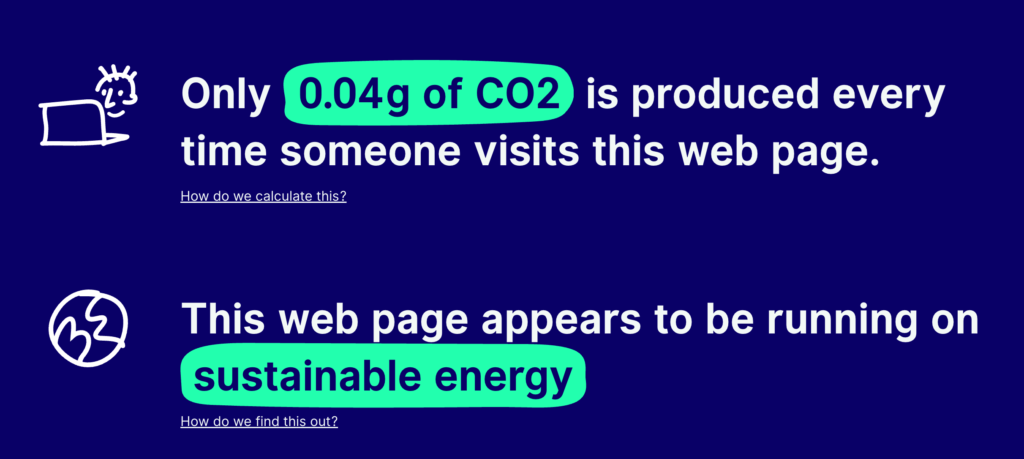
This website emits only 0.04g of C02 (calculator link)
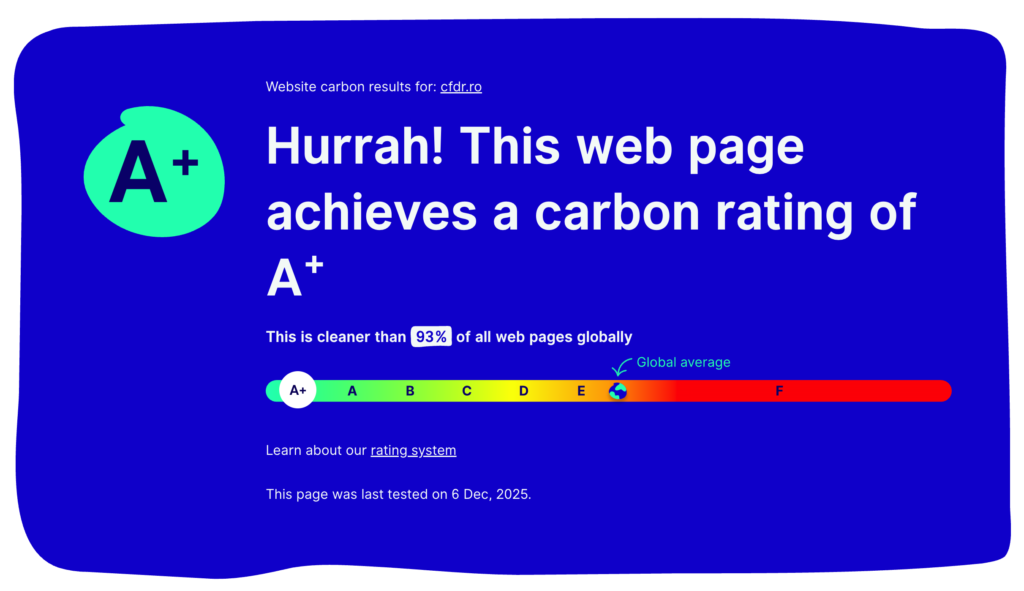
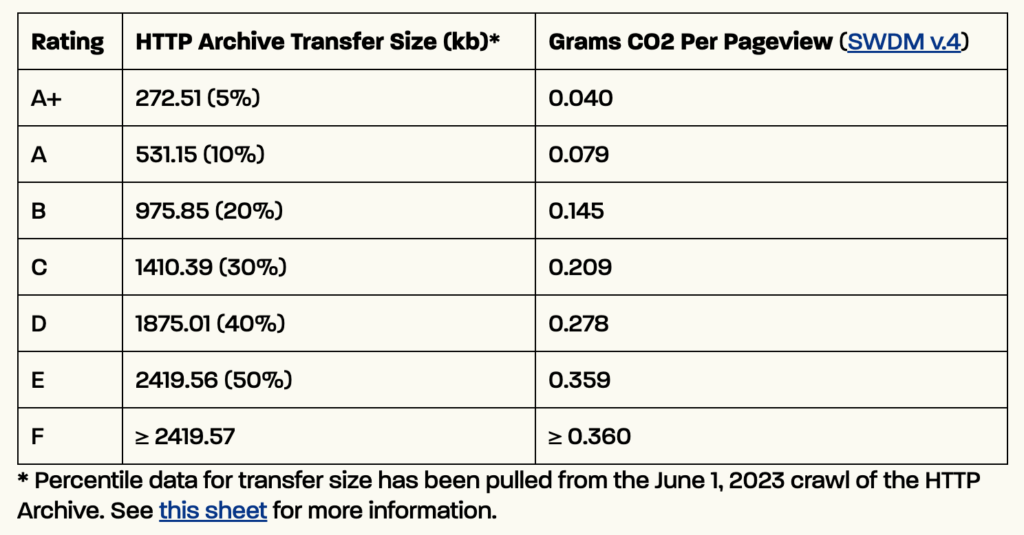
This is cleaner than 93% of all web pages globally (rating system)
Our website has been intentionally designed and optimized following the principles outlined on Sustainable Web Design, ensuring low energy consumption, efficient performance, and minimal environmental impact.
1. Low-Carbon Website Design
Following the Sustainable Web Design methodology, CFDR prioritizes:
- Lightweight pages that require less data transfer and therefore less energy.
- Highly optimized images and modern formats to reduce bandwidth usage.
- Efficient front-end code to reduce CPU load on end-user devices.
- Accessible and inclusive UX that allows users to complete tasks quickly, minimizing unnecessary energy use.
These principles directly contribute to lowering carbon emissions associated with every page load.
2. Verified Low Carbon Emissions
Independent sustainability tests confirm the website’s low environmental footprint:
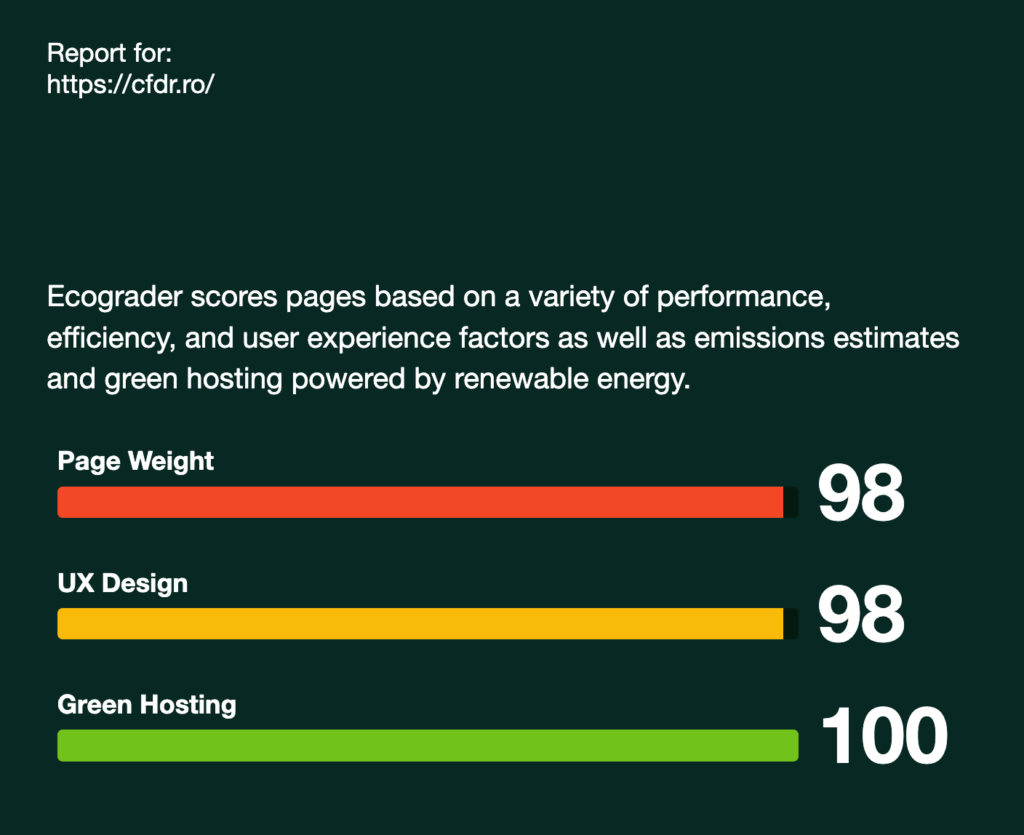
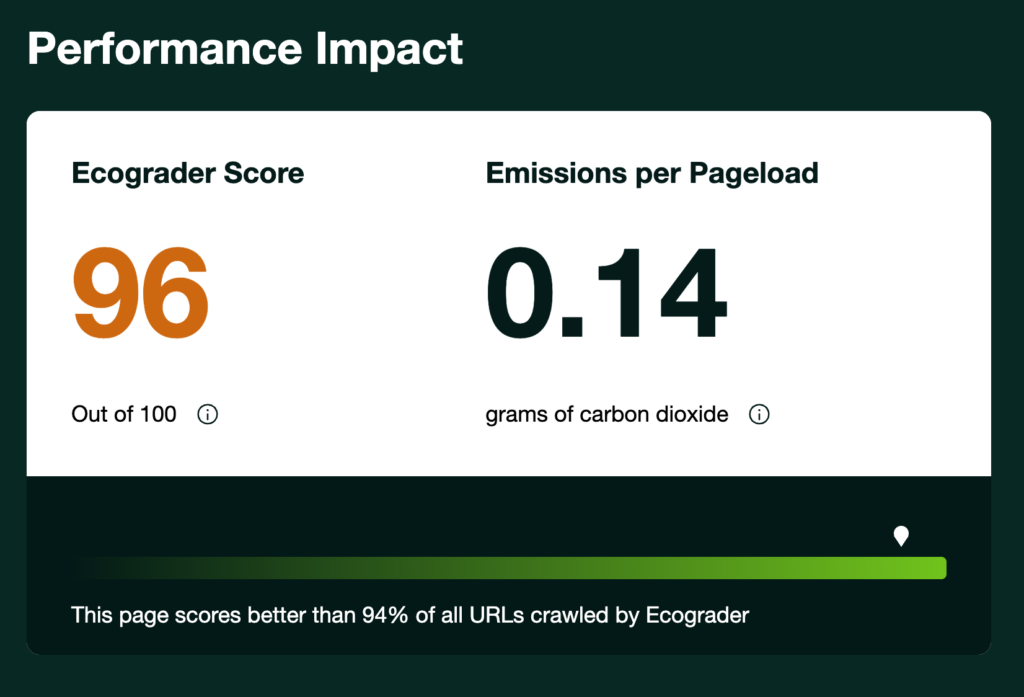
- Ecograder Score: 96 / 100 (higher than 94% of all tested websites) — including Green Hosting: 100/100, Page Weight: 98/100, UX Design: 98/100. Prove link.
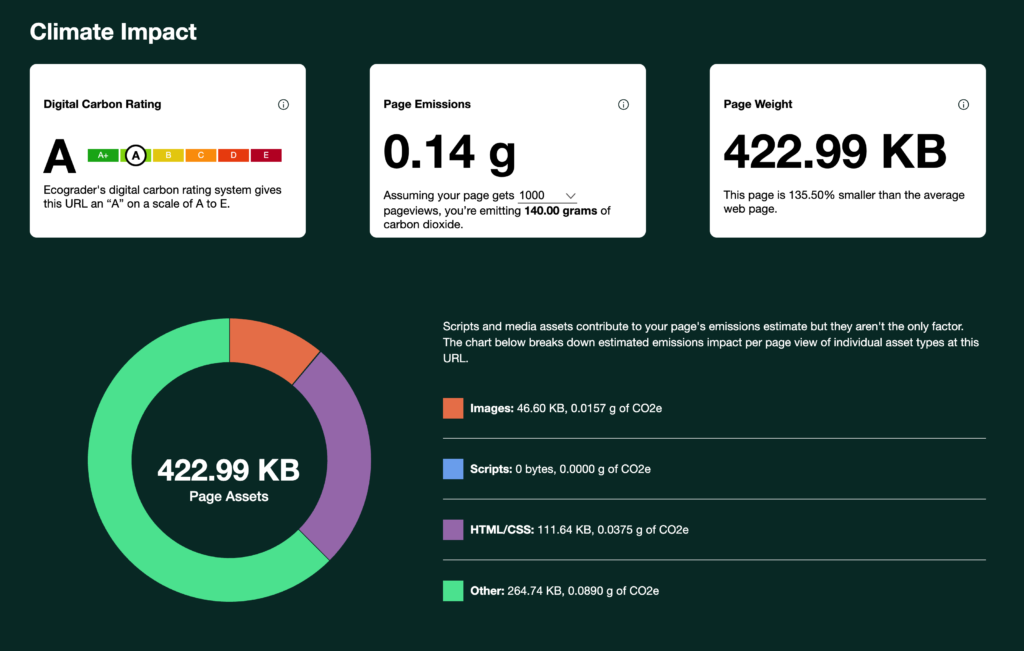
- Estimated emissions per page load: 0.14 g of CO₂ — significantly below the global average page footprint. Prove link. Another test say only 0.04 g of CO2 is produced every time someone visits this website.
- The page is 135% smaller than the average website (422 KB vs >1 MB). Prove link.
These results reflect our continuous effort to maintain a high-performance, low-energy website aligned with sustainable digital standards.
3. Highly Efficient Performance
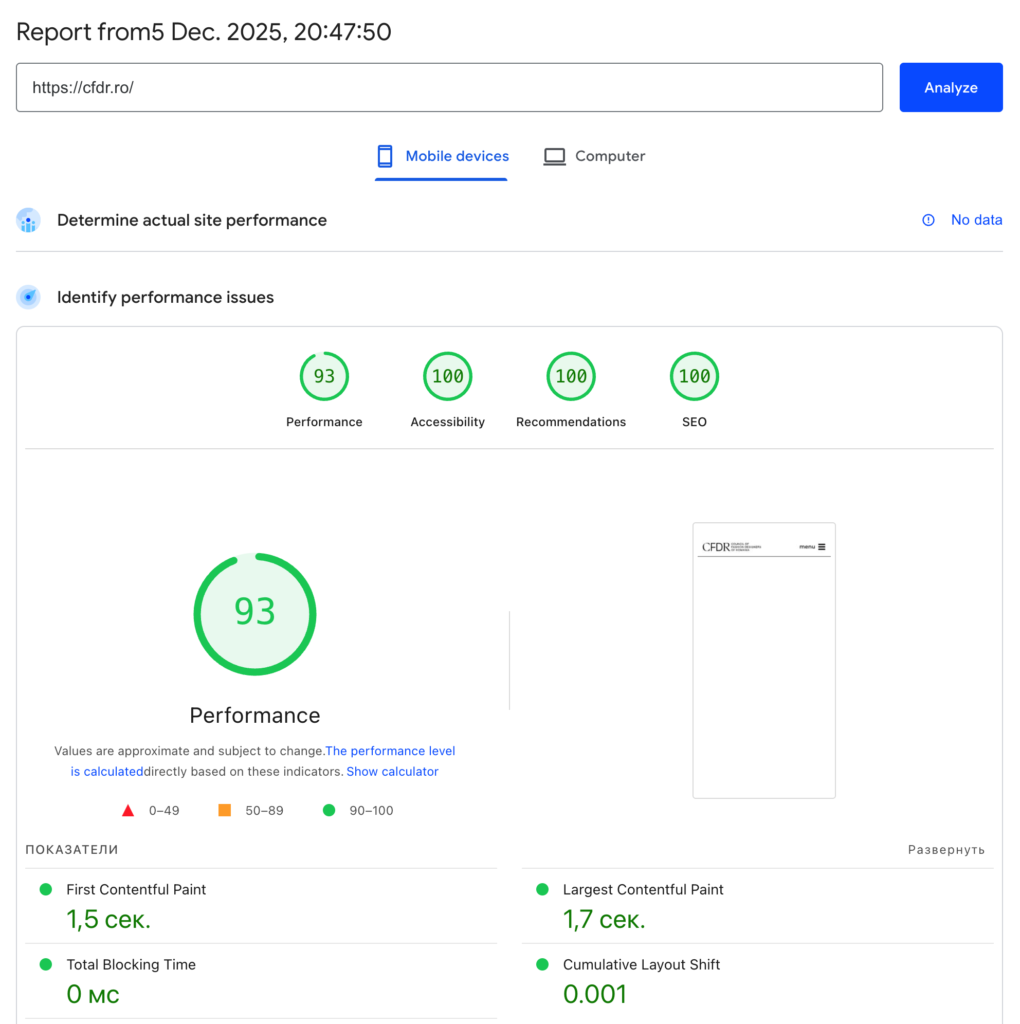
According to Google PageSpeed Insights, the CFDR website performs exceptionally across key sustainability-related metrics:
- Performance Score: 91 (mobile), 100 Accessibility, 100 SEO. Test link.
- Largest Contentful Paint (LCP): 1.6s — fast, energy-efficient rendering. Test link.
- Total Blocking Time (TBT): only 70 ms — minimal CPU load and optimal responsiveness. Test link.
- Cumulative Layout Shift (CLS): 0.001 — stable layout reduces re-renders and device energy usage. Test link.
Faster, leaner pages reduce energy consumption across millions of potential views, making performance a direct sustainability factor.
4. Powered by Green Hosting
CFDR is hosted on Hostinger, a provider recognized for its environmentally conscious infrastructure. Ecograder confirms:
- Green Hosting: 100/100 — data centers powered by renewable energy sources, reducing CO₂ emissions at the server level. Prove link.
- Efficient server configurations matching best practices for sustainable hosting – server link
Choosing green hosting contributes significantly to lowering the digital carbon footprint of CFDR’s online presence.

5. Sustainable UX & Inclusive Design
Following Sustainable Web Design principles, CFDR ensures:
- Full accessibility compliance — confirmed by 100/100 Lighthouse Accessibility score. Test link.
- Cognitive load reduction through structured typography, readable layouts and intuitive navigation.
- No intrusive or energy-heavy UI patterns such as autoplaying media or unnecessary third-party scripts.
Accessible design is sustainable design — helping reduce energy usage on end-user devices while ensuring equal access to information.
6. Commitment to Continuous Improvement
Sustainable web design is an ongoing process. CFDR is committed to:
- Maintaining lightweight content and minimal JavaScript usage.
- Monitoring ecological performance with third-party tools such as Ecograder and Lighthouse.
- Using renewable-energy hosting and continuously optimizing assets.
- Adopting evolving best practices from the Sustainable Web Design community.
Our goal is to ensure that CFDR’s digital footprint remains aligned with the values we promote: responsibility, innovation and sustainability.